


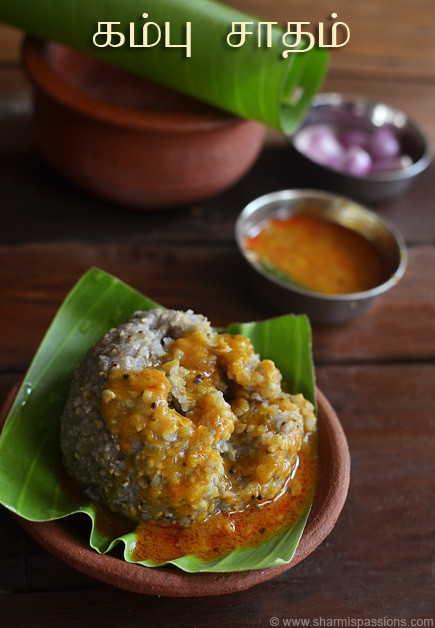
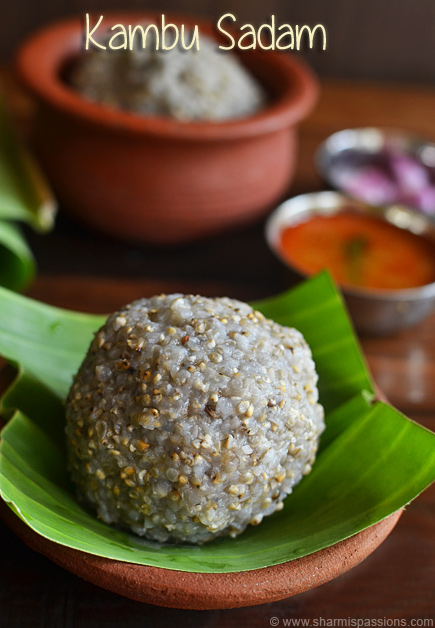
Kambu Sadam (Pearl Millet Rice) is one of the nutritious meals that instantly brings a rustic, homemade charm to your plate. This dish reminds us of our elders who enjoyed this simple yet nutritious food. This recipe can be paired with spicy or tangy side dishes. It is both relaxing and gratifying. This recipe is one of the best options to replace white rice, and also adds more fiber to your diet.
Kambu Sadam is generally served with raw onions, pickles and vadam. It’s a healthy and nostalgic treat. The texture of this recipe is soft and slightly grainy, making it lighter and more satisfying. You can cook it pulpy or granular depending on your preference. It’s a minimalist, versatile dish and it’s very easy to love.
jump to:
About Kambu Sadam
Kambu sadam is made using kambu (millet). It is rich in nutrients and fiber. Millet becomes soft and slightly sticky, making it a great alternative to rice. You can use broken or whole kambu depending on your texture preference. This recipe is a simple and nutritious way to cook millet.
Kambu, as we call it in Tamil, is also known as Pearl Millet in English and Bajra in Hindi. Millet is one of the widely grown millets. The high amount of fiber in millet makes it more beneficial for health. It is one of the natural body coolants so it is best to take it frequently during summers.
You can easily customize this Kambu Sadam recipe. It’s incredibly flexible to work with. You can also adjust the water to make it grainier or softer. You can enjoy it plain, flavor it lightly, or make delicious curd millet or lemon millet. It can be paired with comfort dishes like sambar, puli kuzhambu, or pickles.
It’s best enjoyed warm, but it also remains good for a few hours once cooled. It’s more than just a healthy choice – it’s a deeply satisfying meal rooted in tradition. From its earthy flavor to its soft texture, everything feels perfect. You’ll love how simple ingredients come together to create something so nutritious and timeless.
Kambu Sadam Ingredients
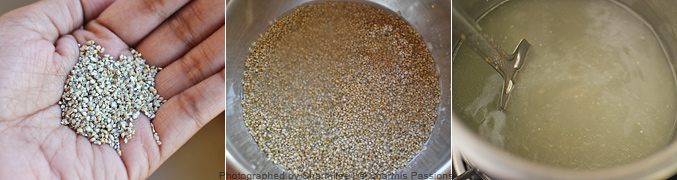
- Kambu – Whole can be used or the broken variety also works best. I have used broken kambu and it cooks faster than whole kambu. You can also pulse whole kambu to break it and use it.
- Water – Water is added to cook millet. Make sure to stick to the measures.
similar recipe
Why does this recipe work
- This recipe is highly nutritious, rich in fiber, making it a healthy meal.
- This is a perfect base recipe for sambar, rasam, or any kuzhambu.
- Great alternative to white rice in daily diet
- Easily customizable texture – grainy or pulpy.
- Easily digestible and suitable for all ages.
- This recipe is very good for weight loss.
How to make Kambu Sadam Recipe step by step
1.I used broken kambu so used it as is. Wash kambu thoroughly. Put 2 cups of water in a thick bottomed vessel and boil it. When the water starts boiling, add kambu in it. Let it boil and cook.
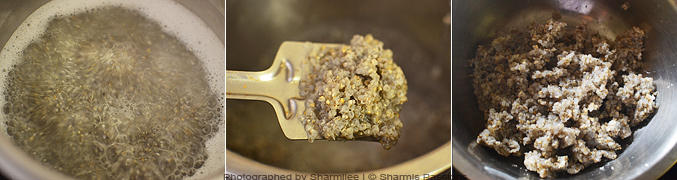
2. Cover and cook on low medium flame. Keep stirring occasionally so that it does not stick to the bottom. At one time the millet will absorb all the water and become soft.
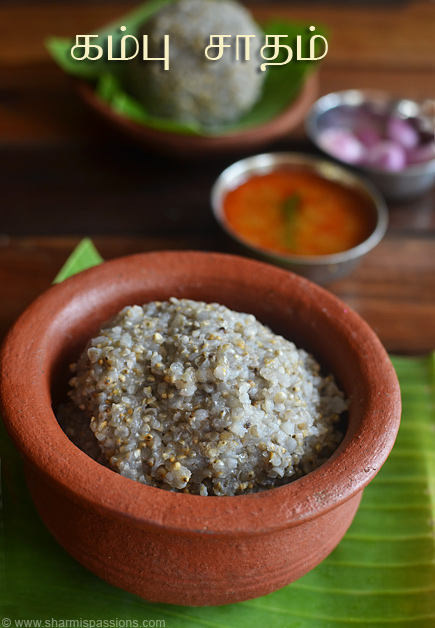
Serve with side dishes and curry of your choice.
Expert Tips
- Cleaning – Use good quality kambu (millet). Check, wash and rinse stones 2-3 times before cooking.
- texture – If you want the rice to have a granular texture, then dry roast the raw millet for 2-3 minutes before cooking it. For soft, pulpy texture, skip roasting and cook directly after washing.
- water ratio – Broken millet is usually cooked in a 4:1 ratio, 4 cups of water per cup of kambu rice. You can adjust the water level according to whether you want a pulpy or grainy texture.
- pressure cooking – If you prefer pressure cooking, use 1:3.5 water ratio. Cook on low-medium flame till 3-4 whistles. This gives the rice a soft, fluffy texture.
- after cooking – Kambu thickens after cooling, so turn off the stove when there is some moisture left in it. This keeps it soft and keeps it from drying out too much.
serving and storage
Serve Kambu Sadam hot with Puli Kuzhambu, Sambar or Rasam. You can also eat it with curd, raw onion or pickle.
Keeps good for up to a day at room temperature, or refrigerate and reheat with a splash of water before serving.
general questions and answers
1.Can I use whole kambu instead of broken kambu?
Yes you can. Just sprinkle some water on it, let it sit for 15 minutes and then put it in the mixer and crush it. Or you can also use whole kambu but it takes time to cook.
2.How do I know if the kambu is ripe?
The kambu should absorb all the water and feel soft. Keep stirring it occasionally to prevent sticking.
3.Can I prepare kambu sadam in advance?
Yes you can. It stores well in the refrigerator. When you’re ready to serve, simply reheat with a little water.
4.Can I add vegetables to Kambu Sadam?
Yes, you can add vegetables like carrots, peas or beans while cooking to make it healthy and nutritious.
5.Do I need to add salt?
This is optional. Usually I don’t add salt while cooking.
If you have any further questions about this Kambu Sadam Recipe Mail me at sharmispassions@gmail.com. Also, follow me Instagram, Facebook, pinterest, youtube And Twitter .
tried this Kambu Sadam Recipe? Do let me know how you liked it. Tag us @sharmispassions on Instagram and hash tag #sharmispassions.
📖 Recipe Card
Kambu Sadam Recipe | Kammanchoru Recipe
Kambu Sadam (Pearl Millet Rice) is one of the nutritious meals that instantly brings a rustic, homemade charm to your plate. This dish reminds us of our elders who enjoyed this simple yet nutritious food. This recipe can be paired with spicy or tangy side dishes. It is both relaxing and gratifying. This recipe is one of the best options to replace white rice, and also adds more fiber to your diet.
Material
- one and a half cup pearl millet/kambu i used broken kambu
- 2 cup Water
Note: If you have whole kambu then sprinkle some water on it and leave it for 15 minutes, then grind it in the mixer and make it coarse…just 2-3 pulses is enough
Instruction
Wash kambu thoroughly. Put 2 cups of water in a thick bottomed vessel and boil it. When the water starts boiling, add kambu in it. Let it boil and cook.
Cover and cook on low medium flame. Keep stirring occasionally so that it does not stick to the bottom. At one time the millet will absorb all the water and become soft.
Switch off.
Serve kambu sadam with raw onion or vadam or pickle of your choice or with any kuzhambu of your choice.
notes
- Cleaning – Use good quality kambu (millet). Check, wash and rinse stones 2-3 times before cooking.
- texture – If you want the rice to have a granular texture, then dry roast the raw millet for 2-3 minutes before cooking it. For soft, pulpy texture, skip roasting and cook directly after washing.
- water ratio – Broken millet is usually cooked in a 4:1 ratio, 4 cups of water per cup of kambu rice. You can adjust the water level according to whether you want a pulpy or grainy texture.
- pressure cooking – If you prefer pressure cooking, use 1:3.5 water ratio. Cook on low-medium flame till 3-4 whistles. This gives the rice a soft, fluffy texture.
- after cooking – Kambu thickens after cooling, so turn off the stove when there is some moisture left in it. This keeps it soft and keeps it from drying out too much.
nutrition Facts
Kambu Sadam Recipe | Kammanchoru Recipe
Quantity per serving (200 grams)
calories 214 Calories from Fat 27
% daily value*
thick 3g5%
saturated fat 1 g6%
Polyunsaturated Fat 1 g
monounsaturated fat 1 g
sodium 18 mg1%
potassium 182 mg5%
carbohydrates 40 grams13%
protein 7 grams14%
calcium 32mg3%
Iron 5 mg28%
*Percent Daily Values are based on a 2000 calorie diet.
