

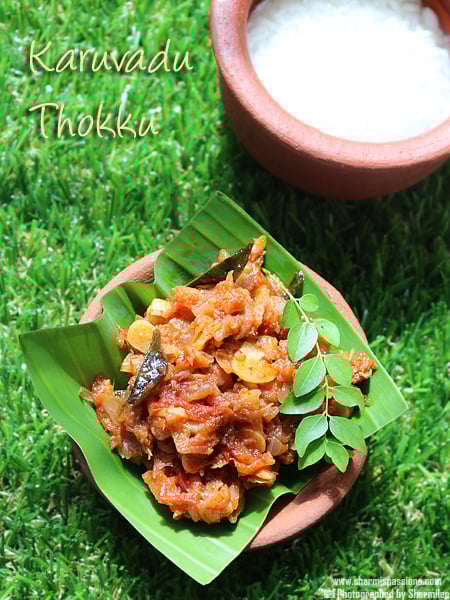
Karuvadu Thoku is one of those traditional side dishes that brings strong homely flavours. It is a spicy and flavourful curry made with dried fish cooked with onions, tomatoes and some everyday spices. The taste is slightly spicy, delicious and very satisfying with hot rice or soft idli or dosa.
When we get good quality dry fish from the market, I often make Karuvadu Thokku. The aroma while cooking is so unique and earthy, you can easily tell that something special is happening in the kitchen. It goes well for both lunch and dinner, and if you like bold strong flavours, this is a must try dish.
jump to:
About Karuvaadu Thoku
Karuvadu Thoku is a popular South Indian side dish made using dry fish simmered with onions and tomatoes until it becomes thick like a pickle consistency. The mixture of spices and tang from the tomatoes gives a deep flavor to the very well salted dry fish. The dish has rich masala flavor and a slight smokiness that naturally comes from the dried fish.
There are many variations of Karuvadu Thokku depending on the region and type in which it is used. Some people use country tomatoes for a more tangy flavor while others like to add coconut paste or tamarind. You can make it dry and thick or gravy-like as you like. Both taste delicious in their own way.
The taste mainly depends on how well the dry fish is soaked and cleaned before cooking. If soaked for too long it will lose flavor, if not enough it will be too salty. I used the ne meen variety for this recipe, but you can make it with any type of dried fish you like.
I make karuvadu amma, but I am very particular about the dry fish (karuvadu) variety. I have just tasted Nethili and Neemeen Karuvadu and I love both. The aroma fills the kitchen, and it reminds me of the weekends when Amma used to make this.
I usually make this for a simple meal of rasam and rice. Amma usually makes this karuvadu thokku with rice and sambar which is the best combination, the leftover thokku pairs well with Neeragaram,
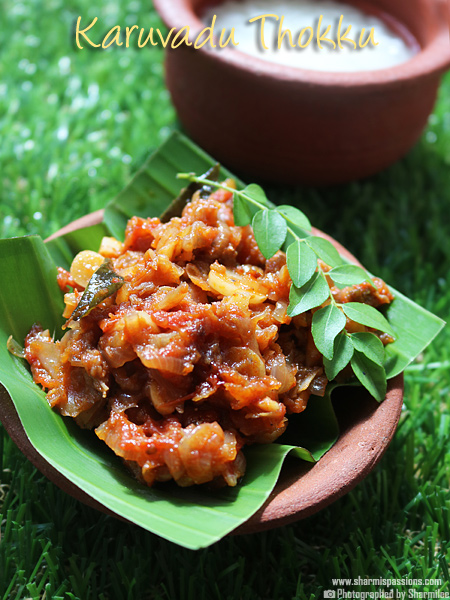
Karuvadu Thokku Ingredients
- dry fish – I have used Nee Meen variety, it gives good flavor and slightly chewy texture. You can use any dried fish you get, but make sure to rinse it well to remove excess salt, it adds better flavor.
- Onion – I added shallots for mild sweetness and to balance the salty and spicy flavours. You can also use larger onions if smaller ones are not available.
- Garlic – I used chopped garlic, it adds strong aroma and deep flavor which goes very well with dry fish.
- Tomato – I have used country tomatoes, they add tang and make the thokku thick and saucy. It adds nice juiciness to the dish which I really like.
- chilli powder – I add it for spice and color. You can adjust as per your spice level, I keep it mild sometimes.
- curry leaves- I have added curry leaves, it adds nice flavor and freshness to the dish, really lifts the flavour.
- Gingerly Oil – I always prefer gingelly oil for this dish as it gives that authentic taste and smell, you can use a little more for extra flavour.
Similar Recipes
How to do Karuvadu Thoku step by step
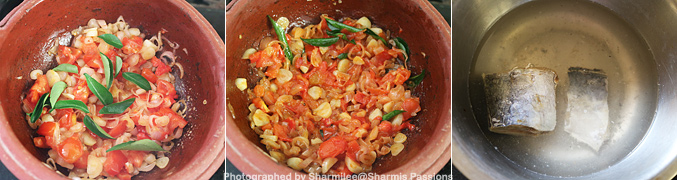
1. Take the skin off the shallots, mince them thinly, then slice the garlic in the pan.
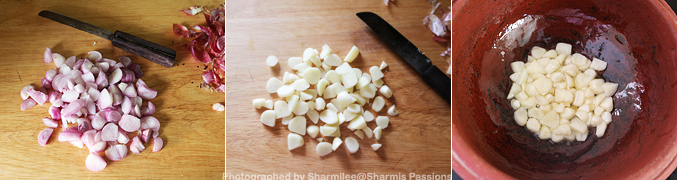
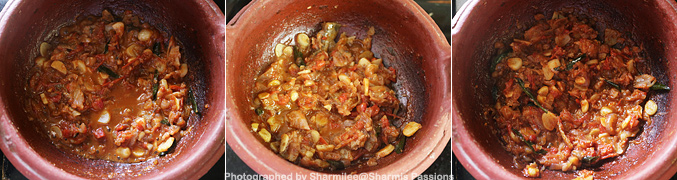
2. Then add the shallots, sauté until it becomes transparent and the raw smell leaves the tomatoes.
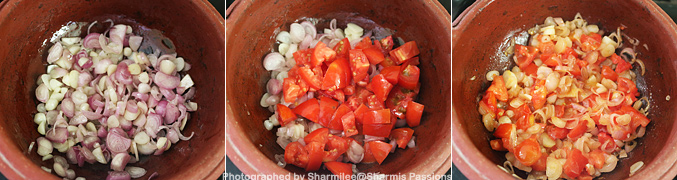
3. Discard the edri curry and continue cooking until the entire mixture turns mushy.
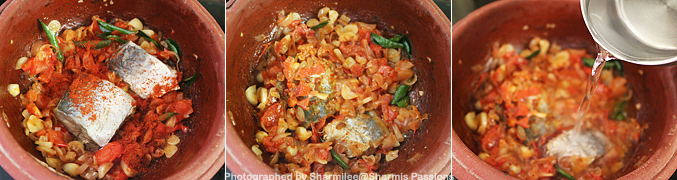
4. Dry Fish with Red Chilli Powder, Saute for 2mins then add water again.
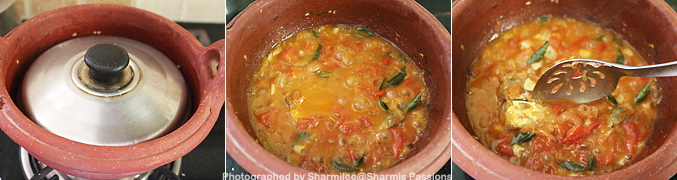
5. Covered for 5mins. Poke the dryfish with a ladle to check if it is cooked.
6. Emma suggests removing the bone and discarding it at this stage, so per her instructions, although this step is optional. For cooking in medium flame.
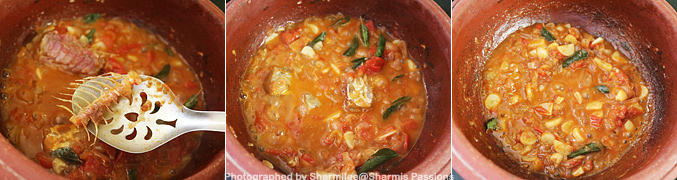
7. Stir until all the moisture is completely absorbed and the mixture becomes like a thokku.
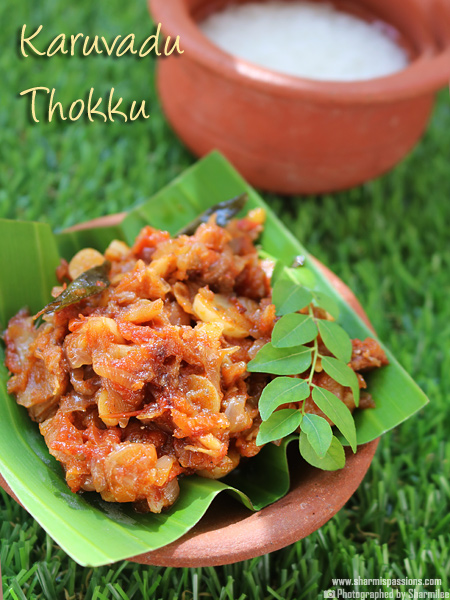
Serve with phulka or pulao.
Expert Tips
- soaking – I usually soak the karuvaadu for 10 minutes in hot water to soften and remove excess salt. Soak for too long and it will loose flavor.
- cooking time – Keep the flame on medium and let it cook on slow speed. This helps all the flavors to mix well and gives a thick consistency.
- choice of oil – Always use gingelly oil for traditional taste. It also helps in reducing the strong smell of dried fish.
- salt balance – Taste the seasoning before adding more salt, as the dry fish already has enough.
- Stability – You can make it dry like pickle or a little gravy style, both ways it tastes good. I prefer a little thicker so it lasts longer.
service and storage
Serve it with hot steamed rice, rasam rice or even soft idlis. It also goes well with dosa and kal dosa. The flavor gets even better after a few hours, so you can make ahead and save for the next meal.
Store leftovers in a clean dry container and refrigerate, stays good for 2 days. Warm slightly before serving.
general questions and answers
1. Do I make this with fresh fish instead of dried fish?
No, this recipe is for dry fish. Fresh fish will break down and not give the same flavor.
2. To reduce the smell of dried fish?
Rinse thoroughly in warm water and use gingelly oil while cooking, it helps reduce strong odors.
3. Can I add coconut to this thokku?
You can add a little ground coconut paste for a creamier texture, but it will alter the taste slightly.
4. Is it too spicy?
It is moderately spicy, you can reduce the red chili powder if making for children or the elderly.
5. Can I store it for a long time?
If you make it the dry type and store it in an airtight jar, it stays good for 2-3 days in the fridge.
If you have any further questions about this karuvaadu thoku recipe Mail me at sharmispassions@gmail.com. Also, follow me Instagram, Facebook, pinterest ,YouTube And Twitter ,
tried this karuvaadu thoku recipeLet me know how you like it. Also tag us on Instagram @sharmispassions and hashtag it #SharmisPassions.
📖 recipe card
karuvadu thokku recipe | dry fish curry recipe
Karuvadu Thoku is one of those traditional side dishes that brings strong homely flavours. It is a spicy and flavourful curry made with dried fish cooked with onions, tomatoes and some everyday spices. The taste is slightly spicy, delicious and very satisfying with hot rice or soft idli or dosa.
Material
- 2 pieces Nee Meen Karuvadu
- half and half cup small onion chopped up
- ⅛ cup Garlic chopped up
- 3 small size Tomato
- 1 small spoon chilli powder
- a small one twig Thief
- 1 tablespoon gingelly oil
- ¾ cup Water
Instruction
-
Peel the skin from the shallots, slice them thinly, then slice the garlic.
-
Heat oil in pan – saute for 2 minutes before adding garlic.
-
Then add small onion, sauté until it becomes transparent and the raw smell leaves, add tomato sauce.
-
Add the curry leaves and cook until the entire mixture becomes mushy.
-
Meanwhile rinse the dry fish thoroughly and soak it in hot water for 10 minutes. Water drain.
-
Add dry fish with red chilli powder, sauté for 2 minutes, add water again.
-
Cook covered for 5 minutes. To check if it is cooked, press the dry fish with a ladle. If it is soft then it is cooked.
-
Amma suggests removing the bone and discarding it at this stage, so as per her instructions, although this step is optional. Continue cooking on medium flame.
-
Cook until all the moisture is completely absorbed and the mixture becomes like a lump.
-
Serve karuvadu thokku with phulka or pulao.
Note
- soaking – I usually soak the karuvaadu for 10 minutes in hot water to soften and remove excess salt. Soak for too long and it will loose flavor.
- cooking time – Keep the flame on medium and let it cook on slow speed. This helps all the flavors to mix well and gives a thick consistency.
- choice of oil – Always use gingelly oil for traditional taste. It also helps in reducing the strong smell of dried fish.
- salt balance – Taste the seasoning before adding more salt, as the dry fish already has enough.
- Stability – You can make it dry like pickle or a little gravy style, both ways it tastes good. I prefer a little thicker so it lasts longer.
nutrition Facts
karuvadu thokku recipe | dry fish curry recipe
Amount per serving (100 grams)
calories 135 calories from fat 72
% daily value*
thick 8g12%
saturated fat 1 g6%
trans fat 0.03g
polyunsaturated fat 2 g
Monounsaturated fat 5g
cholesterol 1mg0%
sodium 34mg1%
potassium 580mg17%
carbohydrates 16g5%
fiber 4g17%
sugar 8g9%
protein 3g6%
Vitamin A 1835iu37%
vitamin C 32mg39%
calcium 54mg5%
Iron 1mg6%
*Percent Daily Values are based on a 2000 calorie diet.
