


Blood Orange Scones This is a delightful dish that can brighten any morning or afternoon. There’s something inherently special about biting into a tender, flaky scone packed with the vibrant, slightly tart-sweet flavor of a blood orange. This isn’t just another basic scone recipe; It’s an experience that’s reminiscent of cozy cafes and sophisticated brunches. People absolutely love these Blood Orange Scones because they offer a perfect balance of sweetness and sour flavor, which is a welcome departure from the usual lemon or plain flavors. The beautiful ruby-red color of blood oranges not only makes them visually stunning but also hints at the unique flavor profile within them. What really sets these apart is how the natural acidity of the blood oranges cuts through the richness of the scones, creating an irresistible flavor that keeps you coming back for more. Get ready to step up your baking game with this unforgettable recipe!
Material:
- 2 cups all-purpose flour
- ¼ cup granulated sugar
- 1 tablespoon baking powder
- ½ tsp salt
- ½ cup cold unsalted butter, cubed
- ½ cup thick cream
- 1 large egg
- 2 tbsp blood orange peel
- ¼ cup blood orange juice
- 1 cup powdered sugar
- 2-3 tablespoons blood orange juice (for the glaze)
- 1 teaspoon blood orange peel (for the glaze)
For Blood Orange Scones
Step 1: Prepare Dry Ingredients and Cut in Butter
In a large mixing bowl, whisk together 2 cups flour, ¼ cup granulated sugar, 1 tablespoon baking powder, and ½ teaspoon salt. Make sure these dry ingredients are mixed well. Next, add ½ cup cold, cubed unsalted butter to the flour mixture. Using a pastry blender, two knives, or even your fingers, cut the butter into the dry ingredients until the mixture resembles coarse crumbs and a few pea-sized pieces of butter remain. It’s important that the butter remains cold, as this is what creates the wonderful flaky layers in your scones. Work quickly to keep the butter from getting too hot.
Step 2: Add Wet Ingredients and Blood Orange Flavor
In a separate, small bowl, whisk together ½ cup heavy cream, 1 large egg, 2 tablespoons blood orange zest, and ¼ cup blood orange juice. The zest will release its aromatic oils, adding a bright, citrusy aroma to the batter. Add this wet mixture to the bowl with the dry ingredients and butter. Using a fork or a spatula, gently mix until combined. Be careful not to overmix; Over-mixing causes gluten to develop in the flour, which can result in a tough crust. Stop mixing as soon as you no longer see streaks of dry flour. The dough will be shaggy and a little sticky.
Step 3: Shape and Bake the Scones
Turn the dough out onto a lightly floured surface. Gently bring the dough together with your hands, patting it into a disk about ¾ to 1 inch thick. You can cut this disk into 8 wedges using either a sharp knife or pizza cutter, or use a round biscuit cutter. If using a cutter, dip it in flour between each cut to prevent sticking. Place the shaped scones on a baking sheet lined with parchment paper, making sure to leave a little space between them. For added color and flavor, you may wish to lightly brush the top with a little extra heavy cream or milk. Bake in the preheated oven at 400°F (200°C) for 15-20 minutes, or until the scones are golden brown on top and cooked through. A toothpick inserted in the center should come out clean.
For Blood Orange Glaze
Step 4: Prepare the Blood Orange Glaze
While the scones are baking or cooling, prepare the delicious blood orange glaze. In a medium bowl, combine 1 cup powdered sugar with 2 to 3 tablespoons fresh orange juice. Start with 2 tablespoons of juice and slowly add more until you achieve a smooth, pourable consistency. The glaze should be thick enough to coat the sconce, but thin enough to drip easily. Add 1 teaspoon blood orange zest for an extra punch of citrus flavor and visual appeal. Taste the glaze and adjust sweetness or tangine extract as needed by adding a little more powdered sugar or blood orange juice.
Step 5: Glaze the Blood Orange Scones
Once the baked blood orange scones have cooled slightly on a wire rack (these should be served warm, but not hot), it’s time to add the final touches. Drizzle the prepared blood orange glaze generously over the top of each scone. You can use a spoon to artfully drizzle the glaze, or for a more even coating, you can dip the tops of the scones directly into the glaze. The vibrant color of the blood orange glaze against the golden-brown sconces is really beautiful. If you want to add a little extra sparkle, you can sprinkle a few more small pieces of blood orange zest on top of the wet glaze before it sets. Let the glaze harden slightly before serving.
conclusion:
And there you have it – a delightful batch of Blood Orange SconesBursting with vibrant citrus flavors and a hint of sweet zest. These scones are more than just a treat; They’re a perfect way to brighten up any morning or afternoon. The beautiful blush of blood orange not only adds a unique visual appeal, but infuses every bite with a sophisticated touch that is wonderfully balanced by the buttery richness of the scone. I encourage you to try this recipe; It’s surprisingly simple and gives incredibly satisfying results.
To serve suggestions, these Blood Orange Scones Absolutely divine served hot, either plain or with a little clotted cream and a drizzle of honey. They also pair wonderfully with a cup of Earl Gray tea or a refreshing glass of milk. When it comes to variety, don’t hesitate to add a sprinkle of cardamom to the dry ingredients for an extra layer of warmth, or a tablespoon of finely chopped candied gin extract for a little spicy kick. You can also replace the blood orange peel with lemon or grapefruit peel if you prefer a different citrus profile. Have fun experimenting and making these sconces your own!
Frequently Asked Questions:
What makes these “Blood Orange Scones” so special?
their specialty Blood Orange Scones The unique flavor and color of blood oranges comes from it. They offer a slightly more complex and less acidic citrus flavor than regular oranges, with a beautiful ruby-red color that makes the scones visually stunning.
If I can’t find blood oranges can I use regular oranges?
Absolutely! While you’ll miss the distinctive color and subtle flavor of blood oranges, regular oranges will work perfectly. If you’re aiming for the same visual effect, you may want to add a small drop of red food coloring, but the taste will still be delicious.
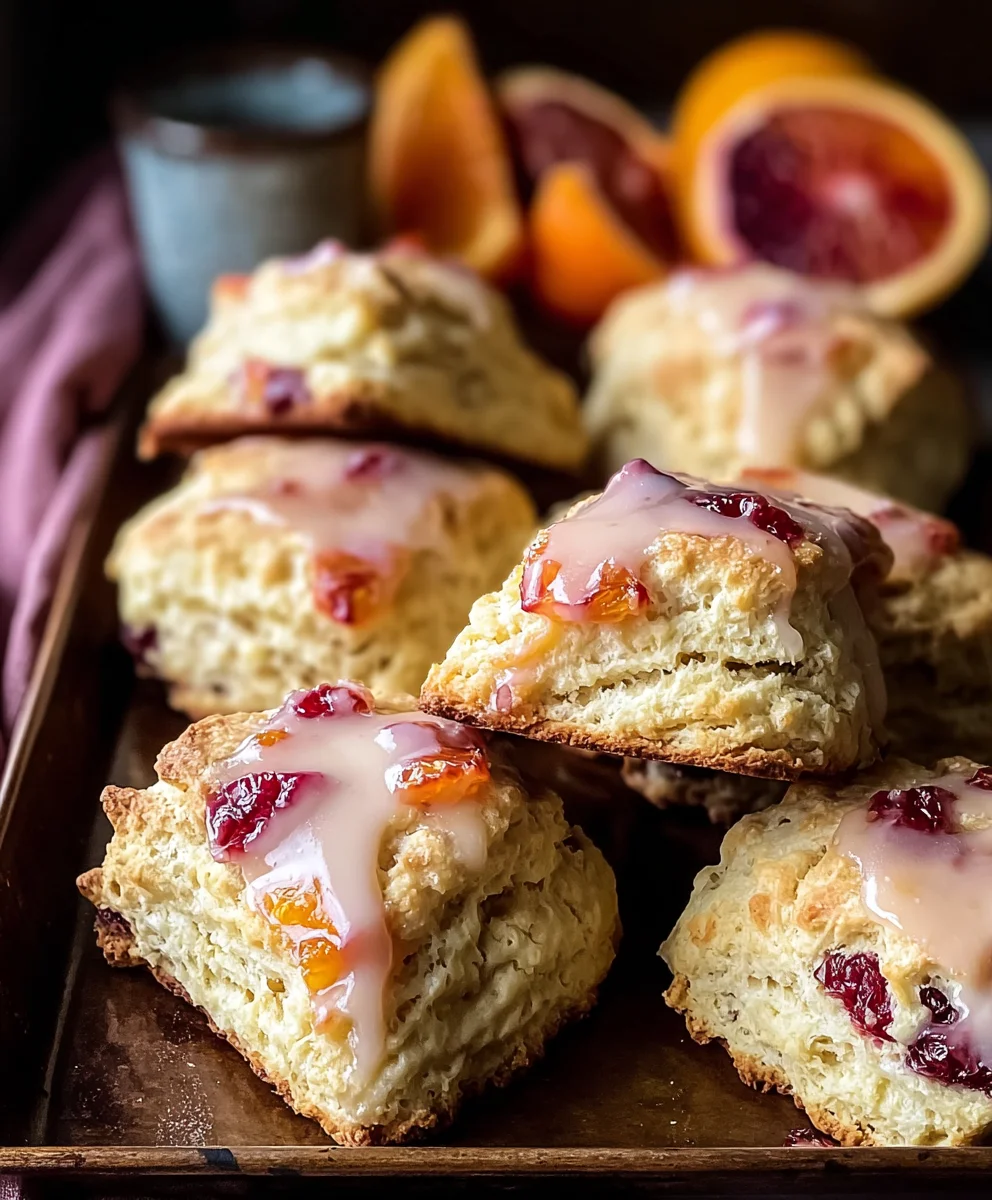
Blood Orange Scones-Sweet Citrus Scones
Enjoy these tender, sweet scones bursting with the vibrant flavor of blood orange, finished with a tart blood orange glaze.
Material
-
2 cups all-purpose flour
-
1/4 cup granulated sugar
-
1 tablespoon baking powder
-
1/2 tsp salt
-
1/2 cup cold unsalted butter, cubed
-
1/2 cup thick cream
-
1 large egg
-
2 tbsp blood orange peel
-
1/4 cup blood orange juice
-
1 cup powdered sugar
-
2-3 tablespoons blood orange juice (for the glaze)
-
1 teaspoon blood orange peel (for the glaze)
Instruction
-
step 1
In a large mixing bowl, whisk together the flour, granulated sugar, baking powder and salt. Cut in cold butter until mixture resembles coarse crumbs and pea-sized pieces remain. This creates flaky layers. -
step 2
In a separate bowl, whisk together heavy cream, egg, blood orange zest and blood orange juice. Add this wet mixture to the dry ingredients. Mix slowly until completely mixed. Do not over mix. -
step 3
Turn the dough out onto a lightly floured surface and gently pat into a disk about 3/4 to 1 inch thick. Cut into 8 wedges or use a biscuit cutter. Place on a parchment-lined baking sheet. -
step 4
Bake in preheated oven at 400°F (200°C) for 15-20 minutes or until golden brown. A toothpick inserted in the center should come out clean. -
Step 5
While the scones are baking or cooling, prepare the glaze: Whisk together the powdered sugar and 2-3 tablespoons orange juice until smooth and pourable. Add 1 teaspoon blood orange zest. -
Step 6
Once the scones have cooled slightly, drizzle or dip them in the blood orange glaze. Let the glaze harden slightly before serving.
important information
Nutrition Facts (per serving)
It is important to consider this information as approximate and not to use it as definitive health advice.
Allergy Information
Please check ingredients for potential allergens and consult a health professional if in doubt.
