


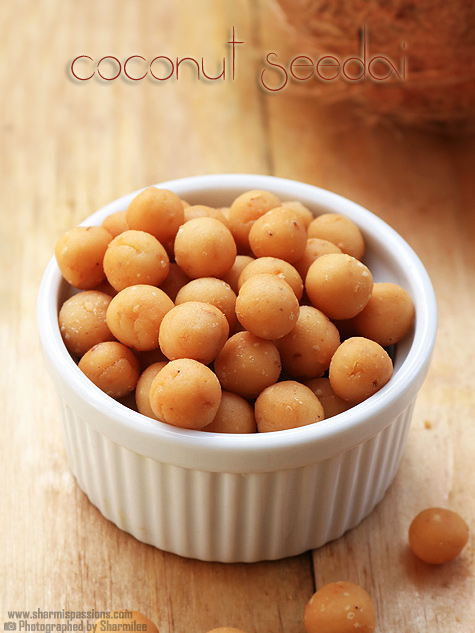
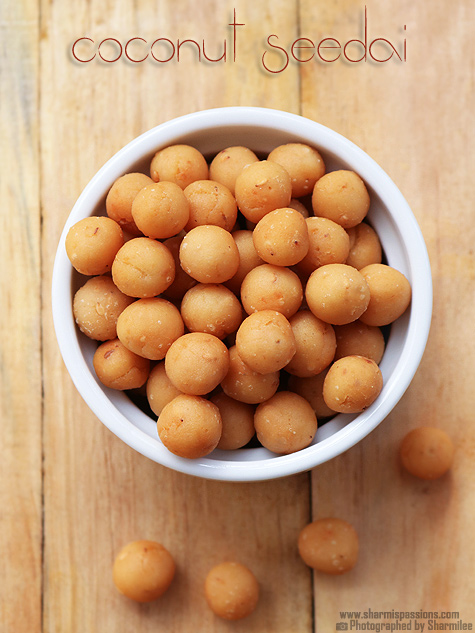
Coconut Seedai is a traditional South Indian snack made especially during Krishna Jayanti celebrations. This crispy deep fried snack is made with rice flour and coconut. The small round balls turn golden and crispy when fried properly with a mild coconut taste and flavour. It is usually made in batches and stored for a few days. Follow step by step images and instructions to make coconut seeding.
This recipe can also be made during festivals or as an evening snack. It is popular in many homes during festival celebrations. The texture of Coconut Seedai is crispy from outside and slightly hard from inside. It is important to control the moisture in the dough to prevent it from curdling. With proper roasting and resting, this recipe gives a perfectly crisp result.
jump to:
about coconut harvesting
Roasted rice flour is used as the base ingredient in coconut seeding. It is also called Thengai Seedai. Urad dal flour is added in small quantities for flavor and texture. Butter is also added to the flour to make it slightly thick. Freshly grated coconut is roasted and added for mild sweetness and texture.
This recipe is mainly made during festivals. It is one of the common snacks made with other traditional sweets and namkeen. Before frying, coconut seeds are shaped into small smooth balls. The size is usually slightly larger than a pea. In this recipe, it is very important to roast and sift the flour properly.
When fried at the right temperature, it has a crisp and firm texture. It is not very spicy and its taste is simple. The sesame seeds add a mild nutty flavor between bites. This method requires patience while rolling the shells as cracks may cause tearing. Keeping the balls greased helps in safe frying.
I usually make it in small quantities during festival times. My family enjoys Coconut Seedai with evening coffee. If stored properly, it remains crisp for several days. Coconut Seedai is a very tasty seedai with the texture and flavor of coconut.
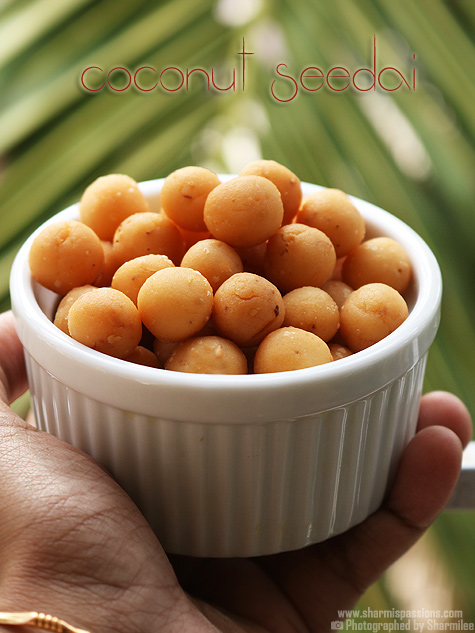
coconut seed material
- rice flour – I have used store bought idiyappam flour. Its base gives a crisp texture. Make sure to fry it well to remove the moisture properly.
- urad dal flour – I roasted it and then strained it before adding. It gives mild flavor and helps in structure, you can also make roasted urad dal powder at home if needed.
- butter – I used butter at room temperature so that it would mix evenly with the flour. Butter adds a little richness and helps to bind, or you can replace it with ghee if necessary.
- grated coconut – I dry roasted freshly grated coconut before mixing. It adds mild sweetness and texture, always ensure moisture is completely removed before adding.
- white sesame seeds – I have added it only for a little crunch and nutty taste. If you prefer a more spicy taste then you can fry them a little before using.
- Salt – To taste, to enhance the flavor and to balance it perfectly.
- Oil – I just used it to deep fry the balls till they turn golden brown. Use enough oil so that the balls fry evenly on all sides.
Why will you love this recipe?
- Simple, traditional ingredients, big flavor
- Beginner-friendly and hassle-free with fresh coconut.
- Delicious and ready in 30 minutes.
- Tailored to your taste with ingredients you have in your kitchen.
- Crisp on the outside, soft on the inside which makes it irresistible.
- Perfect for festivals or any time of craving, offering goodness in every bite.
similar recipe
How to make coconut seed step by step
1. Dry roast the rice flour for a few minutes until light steam starts coming out from the flour. Do not let its color change. If you check by drawing a line, it will be cooked easily, then this is the right stage, stop roasting and switch off. Let it cool completely. – Now put it in a strainer.
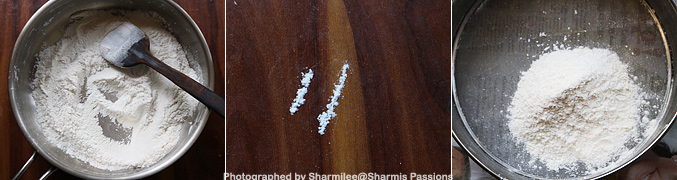
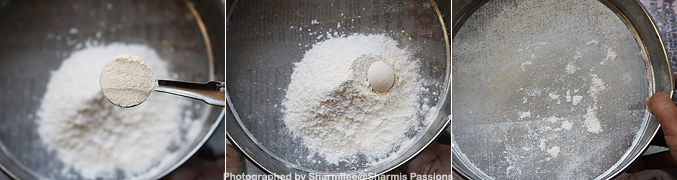
2.Add urad dal flour and sift it at least twice. Discard the particle.
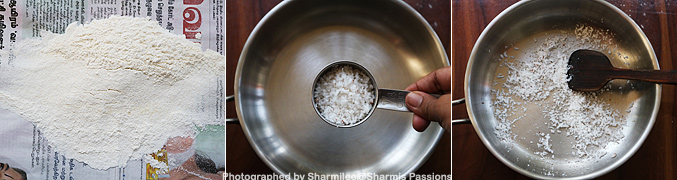
3. Keep the sifted flour aside. Now dry roast the coconut until it dries and there is no moisture left in it.
4.Now in a mixing bowl add sifted flour, butter, sesame seeds, coconut and salt. Mix well with your fingers so that the butter is evenly distributed. – Now add water little by little.
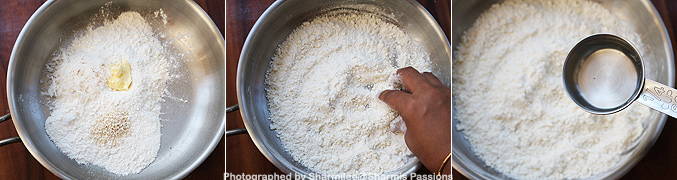
5.Knead a soft, elastic dough as shown. Now pinch a small part. Roll it into a ball slightly larger than a pea.
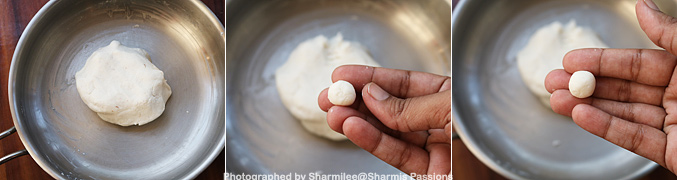
6. Don’t apply pressure while rolling, just roll two or three times and then proceed. Similarly, prepare all the dough by making small balls. Place them on a cloth so that it absorbs excess moisture. Heat oil in a pan – drop the balls in batches and fry.
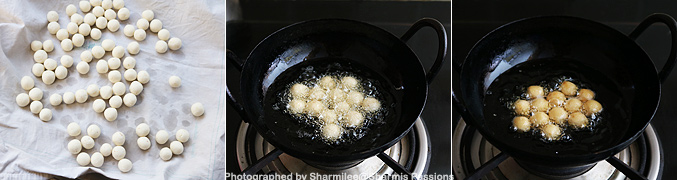
7.Fry on low medium flame, keep turning to ensure even cooking. Deep fry until golden. Take out in tissue paper.
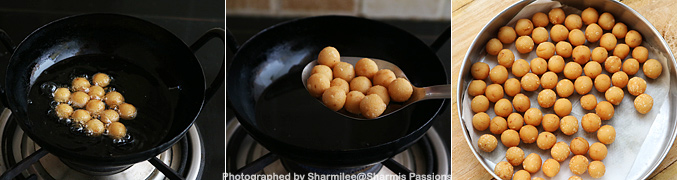
Store in an airtight container.
Expert Tips
- Fry the flour- Always fry the rice flour on medium flame so that there is no room for moisture. This prevents the seeds from bursting in the oil.
- Filter everything- Sieve the flour together so that there are no lumps. Smooth flour helps in making smooth dough.
- Soften the butter – Butter at room temperature mixes easily and gives the dough the right texture.
- Dry the coconut- Dry roast the grated coconut to remove excess moisture.
- Roll easily – The balls may burst while frying, so roll them out nice and smooth.
- Rest before frying – Resting the seeds before frying helps them crisp up better.
- Medium heat is the key – Temperature control also ensures golden color and crispness.
- Test seeding – First of all put one ball in oil. If it bursts, your dough is too wet – just add a spoonful of rice flour and try again.
- Fry in small batches – There is not much crowd on the griddle. Cook them evenly, so they remain crisp.
serving and storage
Serve it with coffee or tea as an evening snack. Cool the seeds completely before storing them in an airtight container to avoid moisture. Remains fresh for a week. Avoid moisture and do not refrigerate. This may eliminate their crunch.
general questions and answers
1. Why do my seeds burst while frying?
If there is too much moisture, air spaces or cracks in the dough, the seedy may burst. Always sift the flour after frying, roll it easily without applying pressure and allow the balls to rest properly before frying.
2.Can I use homemade rice flour in place of store bought idiyappam flour?
yes of course! Just make sure it’s very fine, well roasted and completely dry before using.
3.How will I know when the seeds are completely ripe?
They should turn golden brown and float to the top. Don’t hurry. Fry on medium flame for uniform color and crispness.
4.Can I skip coconut?
You can, but coconut adds a beautiful aroma and richness. If leaving, you can add a pinch of asafoetida or a little cumin for taste.
5.Can I bake or air fry beji instead of deep frying it?
Traditionally, they are deep fried for that iconic texture. Baking or air-frying may work, but the crispiness and flavor will be slightly different.
If you have any further questions about this Coconut Seed Recipe Mail me at sharmispassions@gmail.com. Also, follow me Instagram, Facebook, pinterest, youtube And Twitter .
tried this Coconut Seed Recipe? Do let me know how you liked it. Tag us @sharmispassions on Instagram and hash tag #sharmispassions.
📖 Recipe Card
Coconut Seed Recipe | Thengai Seedai Recipe
Coconut Seedai is a traditional South Indian snack made especially during Krishna Jayanti celebrations. This crispy deep fried snack is made with rice flour and coconut. The small round balls turn golden and crispy when fried properly with a mild coconut taste and flavour. It is usually made in batches and stored for a few days. Follow step by step images and instructions to make coconut seeding.
Material
- one and a half cup rice flour I used store bought idiyappam flour
- 1 small spoon urad dal flour fry and filter
- ¾ tablespoon butter at room temperature
- ⅛ cup Coconut tight
- one and a half small spoon white sesame seeds
- Salt to taste
- Oil to deep fry
Instruction
-
Dry roast the rice flour for a few minutes until light steam starts coming out from the flour. Do not let its color change. If you check by drawing a line, it will be cooked easily, then this is the right stage, stop roasting and switch off.
-
Let it cool completely. – Now put it in a strainer.
-
– Add urad dal flour and sift it at least twice. Discard the particle.
-
– Keep the sifted flour aside. Now dry roast the coconut until it dries and there is no moisture left in it.
-
Now in a mixing bowl add sifted flour, butter, sesame seeds, coconut and salt. Mix well with your fingers so that the butter is evenly distributed.
-
– Now add water little by little. Knead soft and flexible dough.
-
Now pinch a small part. Roll it into a ball slightly larger than a pea.
-
Don’t apply pressure while rolling, just roll two or three times and then move on. Similarly, prepare all the dough by making small balls. Place them on a cloth so that it absorbs excess moisture.
-
Heat oil in a pan – drop the balls in batches and fry.
-
Fry on low medium flame, keep turning for even cooking. Deep fry until golden brown.
-
Take out in tissue paper. Store in airtight container and enjoy coconut seeding!
notes
- Fry the flour- Always fry the rice flour on medium flame so that there is no room for moisture. This prevents the seeds from bursting in the oil.
- Filter everything- Sieve the flour together so that there are no lumps. Smooth flour helps in making smooth dough.
- Soften the butter – Butter at room temperature mixes easily and gives the dough the right texture.
- Dry the coconut- Dry roast the grated coconut to remove excess moisture.
- Roll easily – The balls may burst while frying, so roll them out nice and smooth.
- Rest before frying – Resting the seeds before frying helps them crisp up better.
- Medium heat is the key – Temperature control also ensures golden color and crispness.
- Test seeding – First of all put one ball in oil. If it bursts, your dough is too wet – just add a spoonful of rice flour and try again.
- Fry in small batches – There is not much crowd on the griddle. Cook them evenly, so they remain crisp.
nutrition Facts
Coconut Seed Recipe | Thengai Seedai Recipe
Quantity per serving (75 grams)
calories 141
Calories from Fat 45
% daily value*
thick 5 grams8%
saturated fat 3g19%
Trans fat 0.1 gram
polyunsaturated fat 0.3 g
monounsaturated fat 1 g
cholesterol 8mg3%
sodium 23 mg1%
potassium 35 mg1%
carbohydrate 23 grams8%
fiber 1 g4%
sugar 0.2 grams0%
protein 2 grams4%
Vitamin A 88IU2%
vitamin C 0.2 mg0%
calcium 8mg1%
Iron 0.3 mg2%
*Percent Daily Values are based on a 2000 calorie diet.
