

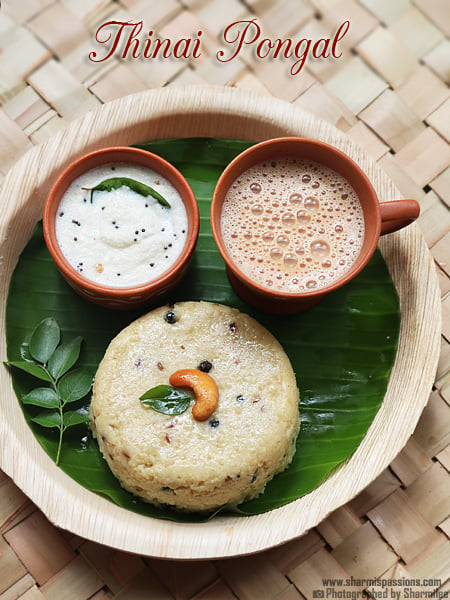
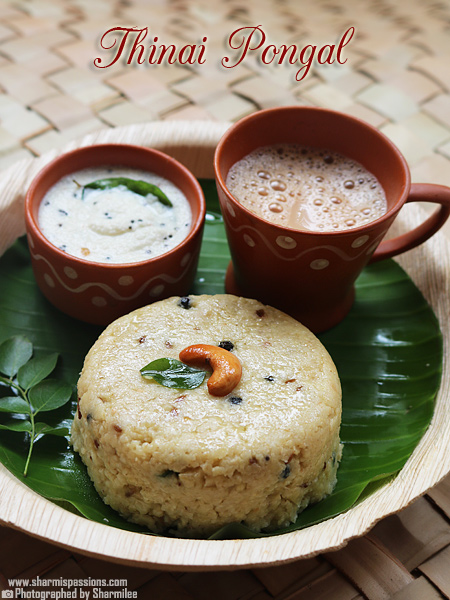
Bajra Pongal is a simple and comforting dish, especially when it is healthy, filling and light on the stomach. This recipe is made by cooking millet with moong dal, then seasoning it with black pepper, cumin seeds, curry leaves, a little ghee and roasted cashew nuts. The taste is mild and pleasant, with a soft texture and a nice aroma coming from the ghee and spices.
You can make it for breakfast or even dinner. Including millet in daily diet is also a really good way. Millets are rich in fiber, aiding digestion and keeping you satiated for longer, so I always try to use them in my recipes whenever possible.
jump to:
About Millet Pongal
Millet Pongal is a simple South Indian dish made from millets such as thinai, varagu or samai. Here I have used thinai which is also known as foxtail millet. After cooking it becomes soft and mixes very well with moong dal. Pongal Ven turns out to be creamy, soft and slightly sticky like the Pongal that we make with rice.
The flavor of Pongal mainly comes from the tadka. Freshly ground black pepper, cumin, curry leaves and ginger add a lovely aroma. I think this Pongal tastes best when served hot with a drizzle of ghee on top. It is gentle, simple and gives a feeling of home comfort every time.
You can also make it using other millets. Varagu will give a slightly grainy texture, while Samaai will be more soft. For better taste, you can also add a spoon of ghee or a little coconut in the tempering. Each millet has its own taste and charm.
I usually make this on weekends or when I want to eat something light and still feel full. It takes very little effort and the taste is always comforting. A bowl of hot millet pongal with chutney and sambar is my idea of a simple happy meal.
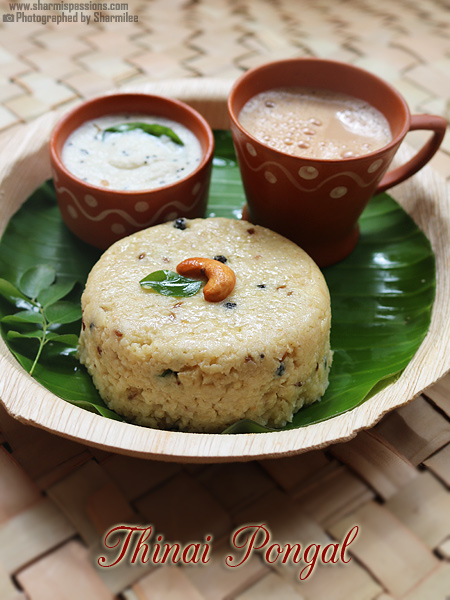
Millet Pongal Ingredients
- Thinai (foxtail millet) – I have used thinai here, it cooks soft and gives a mild nutty flavour. You can also try other millets like varagu or samai, it also works well.
- Bean lentil – I used moong dal as it gives a creamy soft base and mixes well with the millet. I usually fry it lightly to bring out good aroma and taste.
- Water – I add enough water to make the pongal soft and sticky. It may seem watery at first but becomes thick as it cools.
- Ghee – I have used ghee for tempering and also while serving. It gives rich taste and smooth finish. If you like the spicy taste of ghee, you can add more.
- Cashew – I roasted the cashews in ghee until golden and added them. It adds crispness and a slightly nutty flavor in places.
- tempering – I used a little oil and ghee for the tempering, along with ground black pepper, cumin seeds, curry leaves, chopped green chillies, finely chopped ginger and a small pinch of asafoetida. It gives lovely aroma, mild spice and freshness all at once to Pongal. If you want a different taste, you can use coconut oil instead of oil.
Why does this recipe work
- This recipe is simple and easy, no fancy ingredients.
- It is healthy and makes for a light breakfast or dinner.
- You can make it using any millet available and still get the same soft texture.
- It uses very little ghee and oil so it is good for health and digestion.
- The taste is mild and comfortable, suitable for people of all ages.
similar recipe
How to make Bajra Pongal step by step
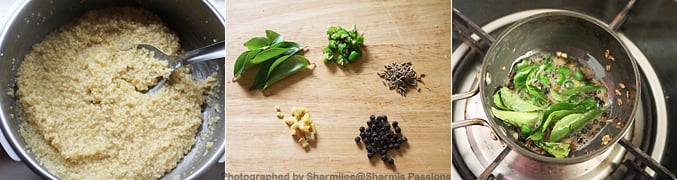
1. Dry roast the moong dal until it turns golden brown. Put in the pressure cooker, then wash the millet thoroughly, drain the water and put it in the cooker.
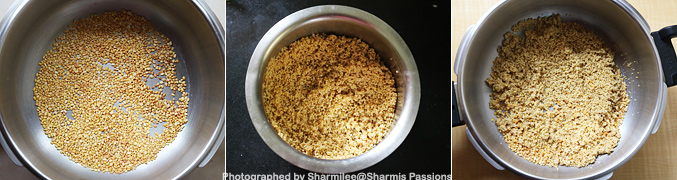
2. Add water and pressure cook on medium flame for 3-4 whistles. Switch off.
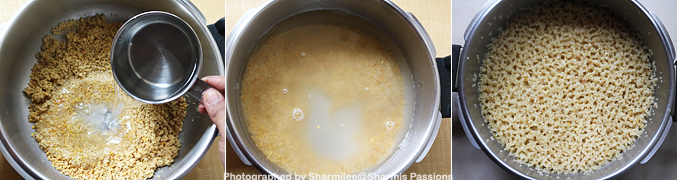
3. After the pressure is released, mash the rice and dal well with a ladle. At this stage it will look sticky but will start to thicken over time. Now get ready with the ingredients for tadka. Heat oil in a pan – add the items listed under ‘Tadka’ and let it splutter.
4.Add the fried ingredients to the Pongal, add salt as required and mix well. Fry the cashews in ghee until they turn golden.
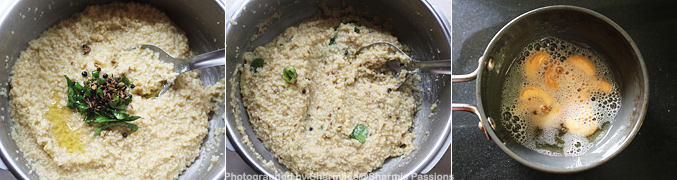
5. Add fried cashews to Pongal. Stir quickly, I added a little more salt because it was too little when I tasted it.
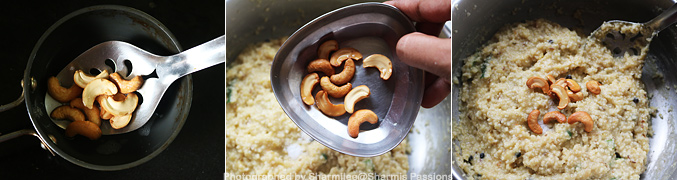
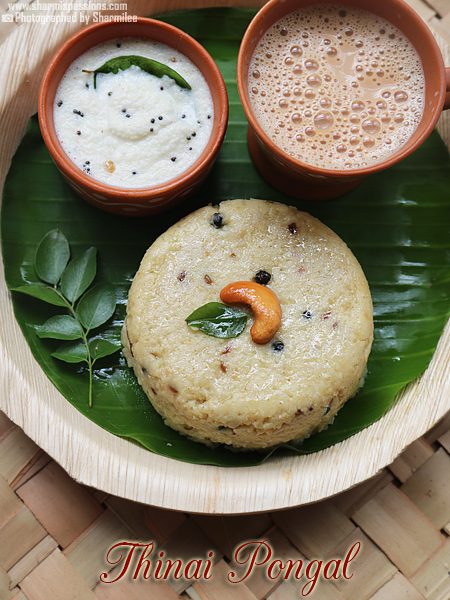
Sprinkle ghee on top and serve hot with chutney and sambar.
Expert Tips
- roast – I fry the moong dal until it turns light golden. This step gives good taste and avoids raw smell.
- amount of water – I add a little more water than normal rice pongal because millet absorbs water very fast. Even though it may seem watery at first, it will thicken as it cools down a bit.
- tempering – I always add tadka separately and add it to the cooked pongal at the end. This keeps the taste fresh and does not burn.
- adding ghee – I add ghee while tempering and then just before serving. It gives a pleasant aroma and keeps the Pongal moist and soft.
- serve hot – I always serve it hot otherwise it dries up quickly. If it becomes dry, you can sprinkle some hot water in it and mix it, it will become soft again.
serving and storage
Serve it with hot coconut chutney or sambar. You can also sprinkle some ghee on top, it tastes better and also adds shine to the top. This dish is best when not hot or warm. If you have some left, keep it in a closed container in the refrigerator.
It remains good for a day. While reheating, sprinkle a little water and heat again until it becomes soft. Do not store for long as millet dries quickly.
general questions and answers
1.Can I use any millet?
Yes, you can use varagu, samai or kuthiraivali, it also works well. The texture may change slightly but the taste will be good.
2.Can I skip moong dal?
I do not suggest skipping the dal as it gives a creamy soft texture. Without this, Pongal may seem dull.
3.Can I include vegetables in Pongal?
Yes, you can add small chopped carrots, beans or peas. It makes Pongal colorful and more healthy.
4.Can I make this without pressure cooker?
Yes you can, just cook it in an open vessel but it will take a little more time. Keep stirring it so that it does not stick.
5.Why does my Pongal become dry after some time?
Millet absorbs water rapidly, hence it dries up when it cools. Just sprinkle hot water and mix well before serving again.
If you have any further questions about this Millet Pongal Mail me at sharmispassions@gmail.com. Also, follow me Instagram, Facebook, pinterest ,youtube And Twitter ,
tried this Millet PongalDo let me know how you liked it. Tag us @sharmispassions on Instagram and hash tag #sharmispassions.
📖 Recipe Card
Millet Pongal Recipe
Bajra Pongal is a simple and comforting dish, especially when it is healthy, filling and light on the stomach. This recipe is made by cooking millet with moong dal, then seasoning it with black pepper, cumin seeds, curry leaves, a little ghee and roasted cashew nuts. The taste is mild and pleasant, with a soft texture and a nice aroma coming from the ghee and spices.
Material
- one and a half cup Thinai Arsi
- ¼ cup Bean lentil
- 3 cup Water
- 5 whole Cashew
- 1 small spoon Ghee
- salt to taste
To get angry:
- 1 small spoon Oil
- one and a half small spoon black pepper whole or roughly crushed
- one and a half small spoon Cumin whole or roughly crushed
- Some? Curry leaf
- 1 Green chilly
- one and a half small spoon Ginger finely chopped
- ⅛ small spoon hing
Instruction
-
– Dry roast the moong dal until it turns golden brown. Put in the pressure cooker, then wash the millet thoroughly, drain the water and put it in the cooker.
-
Add water and pressure cook on medium flame for 3-4 whistles. Switch off.
-
– After the pressure is released, mash the rice and dal well with a ladle. At this stage it will look sticky but will start to thicken over time.
-
Now get ready with the tadka things… Heat oil in a pan – add the things listed under ‘Tadka’ and let it splutter.
-
Add the fried ingredients to the Pongal, add salt as required and mix well. Fry the cashews in ghee until they turn golden.
-
Add fried cashews to Pongal. Stir quickly, I added a little more salt because it was too little when I tasted it.
-
Serve Bajra Pongal hot with chutney and sambar, sprinkling ghee on top.
notes
- roast – I fry the moong dal until it turns light golden. This step gives good taste and avoids raw smell.
- amount of water – I add a little more water than normal rice pongal because millet absorbs water very fast. Even though it may seem watery at first, it will thicken as it cools down a bit.
- tempering – I always add tadka separately and add it to the cooked pongal at the end. This keeps the taste fresh and does not burn.
- adding ghee – I add ghee while tempering and then just before serving. It gives a pleasant aroma and keeps the Pongal moist and soft.
- serve hot – I always serve it hot otherwise it dries up quickly. If it becomes dry, you can sprinkle some hot water in it and mix it, it will become soft again.
nutrition Facts
Millet Pongal Recipe
Quantity per serving (100 grams)
calories 349 calories from fat 81
% daily value*
thick 9 grams14%
saturated fat 2 grams13%
Trans Fat 0.01 grams
polyunsaturated fat 2g
Monounsaturated Fat 3g
cholesterol 6 mg2%
sodium 104 mg5%
potassium 141 mg4%
carbohydrate 55 grams18%
fiber 8 g33%
sugar 2 grams2%
protein 13 grams26%
Vitamin A 59iu1%
vitamin C 3mg4%
calcium 34 mg3%
Iron 3mg17%
*Percent Daily Values are based on a 2000 calorie diet.
