

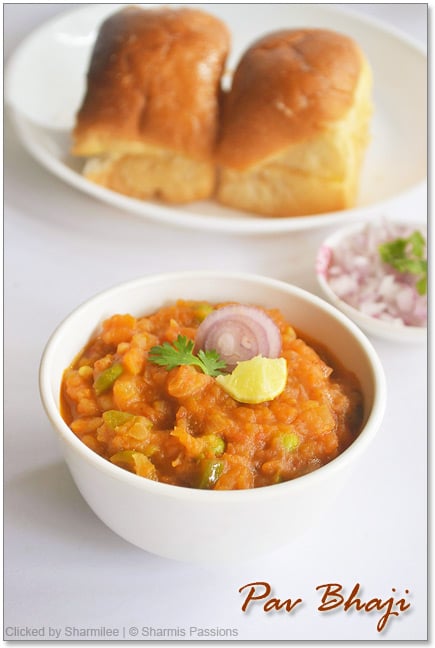
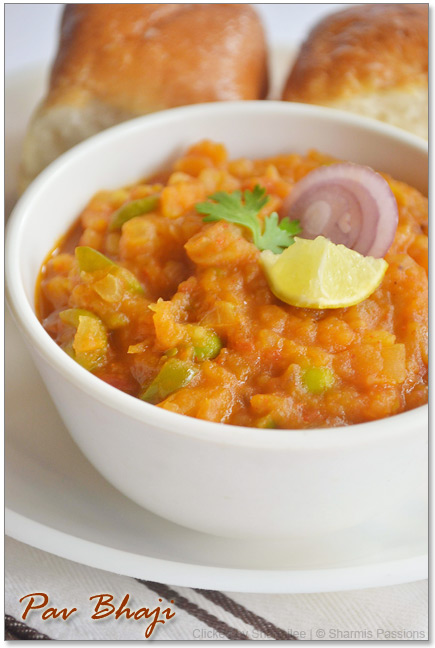
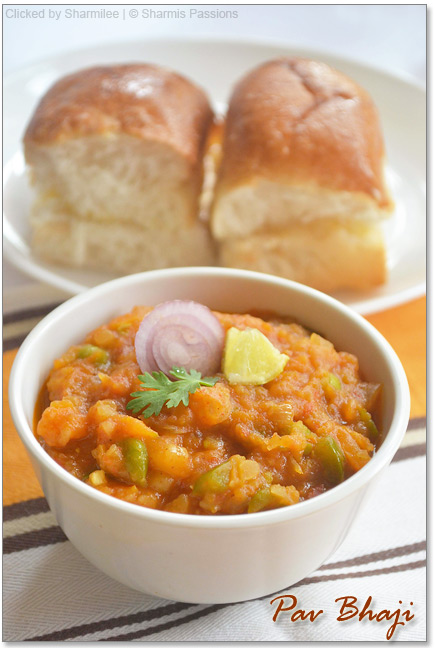
Pav Bhaji is a popular Indian street food consisting of a mixture of vegetables, spices, herbs with a soft butter toasted pav bun. This Mumbai style street food is a popular demand in restaurants and chaat shops. Homestyle Pav Bhaji has a unique taste and is great for parties, get-togethers, etc. Learn how to make the best pav bhaji with step by step pictures.
Pav Bhaji is a delicious, flavourful vegetable masala. Pav bhaji is widely popular home style and street style. My frequent order at chaat shops is Dahi Puri or Pav Bhaji. Mittu likes pav bhaji very much but Gugu makes pav bhaji alone but when I make it at home, he likes it very much. Maybe the shopkeepers are too spicy for his taste buds.
jump to:
about pav bhaji
Pav Bhaji is an Indian street food consisting of thick vegetable-filled gravy served with butter toasted dinner rolls. Here pav refers to pav bun and bhaji is the vegetable gravy that is served along with it. Pav Bhaji is undoubtedly one of the most loved street foods in India, both in North and South.
Pav Bhaji is one of the popular and iconic street food especially in Mumbai. It is now widely found everywhere from small shops to big restaurants. But the best authentic pav bhaji is the one you get in Mumbai.
There is a special spice mix called pav bhaji masala which is available in stores but you can easily make these at home too. I usually make a small batch of it and store it to make pav bhaji, tawa pulao, curries, gravies etc.
similar recipe
pav bhaji ingredients
- Pav bun – Use the freshest soft dinner rolls or loaf buns available. You can also use homemade loaf buns.
- vegetables – I used onion, tomato, capsicum, potato, carrot, beans and peas.
- butter – Use plenty of butter in both gravy and toasting.
- spice powder – Red chilli powder and pav bhaji masala powder are used here.
- ginger garlic paste -Ginger garlic paste further enhances the taste of curry.
- coriander leaves Coriander leaves have been added in abundance for garnish.
- lemon juice – Lemon juice balances the taste.
How to make pav bhaji step by step
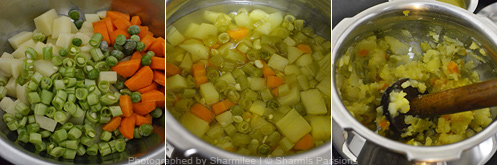
1. Cut the vegetables coarsely. Pressure cook all the vegetables until soft (4-5 whistles). Drain the water and reserve the stock. Then mash it well with the help of a ladle. Cancel.
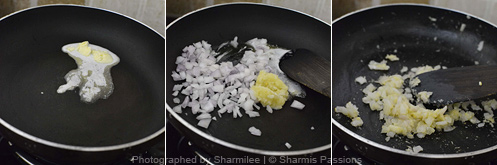
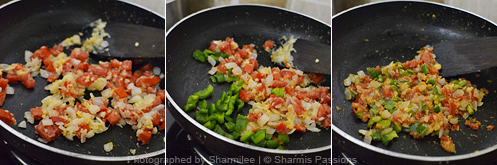
2. Heat oil and butter in a pan, fry onion (save a little for garnishing), add ginger garlic paste and fry until light golden.
3. Add tomatoes and fry until soft and raw smell comes out. Now add capsicum and fry for 2 minutes. Add red chilli powder, salt as required and mix.
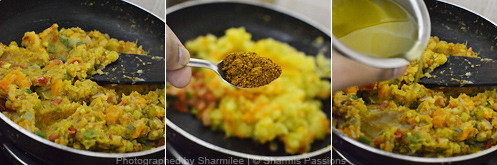
4. Then add mashed vegetables and mix. Add pav bhaji masala powder and mix well. Now add the remaining stock water.
5.Let it boil (adjust salt at this stage) and let it cook in simmer until it thickens slightly. Add lemon juice and green coriander and turn off. Toast the buns with the remaining 1 tablespoon butter. Serve on toasted pav buns and serve with bhaji.
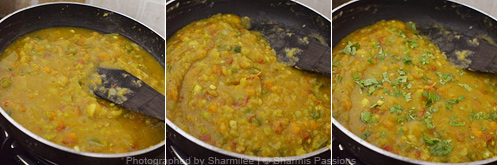
serve hot!
Expert Tips
- You can also take vegetables like cauliflower, mushroom.
- If you don’t get pav buns, proceed with normal milk buns or butter buns.
- While serving, do not leave chopped raw onion and green coriander.
- Bhaji also tastes good with toasted bread.
- Don’t skip the butter as it is the main ingredient that makes this chat delicious.
service and storage
Pav bhaji is served hot with roasted pav buns. It keeps well in the refrigerator for up to 2 days, you can also reheat it and serve it.
If you have any further questions about this Pav Bhaji Recipe Mail me at sharmispassions@gmail.com. Also, follow me Instagram, Facebook, pinterest, youtube And Twitter .
tried this Pav Bhaji Recipe ? Do let me know how you liked it. Tag us @sharmispassions on Instagram and hash tag #sharmispassions.
📖 Recipe Card
Pav Bhaji Recipe
Pav Bhaji is a popular Indian street food consisting of a mixture of vegetables, spices, herbs with a soft butter toasted pav bun. This Mumbai style street food is a popular demand in restaurants and chaat shops. Homestyle Pav Bhaji has a unique taste and is great for parties, get-togethers, etc. Learn how to make the best pav bhaji with step by step pictures.
Material
- 4 Pav Buns
- 2 Potato (roughly chopped)
- 8 beans (roughly chopped)
- 2 Carrot (roughly chopped)
- 2 Tomato (roughly chopped)
- one and a half Capsicum
- ¼ cup Pea
- 1 small spoon ginger garlic paste
- 1 tablespoon Pav Bhaji Masala Powder
- 1 small spoon chilli powder
- 1 small spoon cooking oil
- 2 tablespoon butter
- 1 medium sized Onion (roughly chopped)
- 1 tablespoon coriander leaves for decoration
- one and a half small spoon lemon juice
Instruction
-
Cut the vegetables roughly. Pressure cook all the vegetables until soft (4-5 whistles). Drain the water and reserve the stock. Then mash it well with the help of a ladle. Cancel.
-
Heat oil and butter in a pan, fry onion (save a little for garnishing), add ginger garlic paste and fry until light golden.
-
Add tomatoes and fry until soft and raw smell comes out. Now add capsicum and fry for 2 minutes. Add red chilli powder, salt as required and mix.
-
Then add mashed vegetables to it and mix. Add pav bhaji masala powder and mix well. Now add the remaining stock water.
-
Let it boil (adjust salt at this stage) and let it cook in the sim until it thickens slightly. Add lemon juice and green coriander and turn off. Toast the buns with the remaining 1 tablespoon butter. Serve on toasted pav buns and serve with bhaji.
-
serve hot!
notes
- You can also take vegetables like cauliflower, mushroom.
- If you don’t get pav buns, proceed with normal milk buns or butter buns.
- While serving, do not leave chopped raw onion and green coriander.
- Bhaji also tastes good with toasted bread.
- Don’t skip the butter as it is the main ingredient that makes this chat delicious.
nutrition Facts
Pav Bhaji Recipe
Quantity per serving (125 grams)
calories 476
Calories from fat 153
% daily value*
thick 17 grams26%
saturated fat 9 grams56%
Trans fat 0.5 grams
Polyunsaturated Fat 1 g
Monounsaturated Fat 4g
cholesterol 40 mg13%
sodium 256 mg11%
potassium 1539 mg44%
carbohydrates 72 grams24%
fiber 11 grams46%
sugar 15 grams17%
protein 11 grams22%
Vitamin A 12020iu240%
vitamin C 75 mg91%
calcium 83 mg8%
Iron 3mg17%
*Percent Daily Values are based on a 2000 calorie diet.
